
British Passport Renewal in 2026: New Blue Design, EU Entry Rules & Why Millions Are Being Caught Out

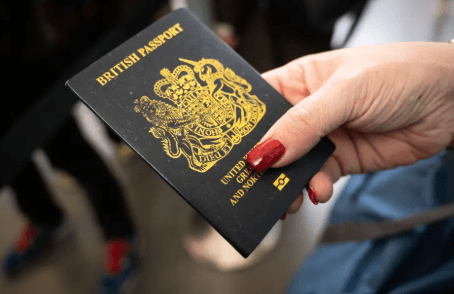
A lot of British travellers are getting a nasty surprise at European borders. Their passport looks perfectly fine. The expiry date shows months or even years of validity left. But they are still being turned away or told their document is not acceptable for EU entry.
This is not a mistake. And it is happening to more people than ever in 2026.
If you are planning to travel to Europe this year, or if your passport is more than eight years old, you need to read this carefully.
The New Blue Passport: What Has Actually Changed?
Let us start with the good news. The UK passport has been redesigned, and it looks great.
From late 2025 and into 2026, a completely updated blue passport has been rolling out across the country. This is the first full redesign in about five years. The new design carries King Charles III’s coat of arms on the cover, replacing the design associated with Queen Elizabeth II.
Inside, the pages have been updated with watermarked images of British landmarks. Scotland is represented by Ben Nevis. England appears through the Lake District. Wales is shown through Three Cliffs Bay. Northern Ireland is featured through the Giant’s Causeway. Each nation gets its moment.
But the bigger story is security. The Home Office has described these new passports as the most secure British passports ever produced. They include advanced holographic and translucent features that make them far harder to copy or fake. Border officials can verify them more easily too.
So the new design is both beautiful and more secure. That is welcome news.
However, there is one important thing to remember. If you already have a passport with Queen Elizabeth II’s coat of arms, it is still perfectly valid. You do not need to rush and replace it just because of the redesign. But you may have other reasons to consider a british passport renewal very soon, and those reasons matter a lot for EU travel.
The Post-Brexit Rules That Are Catching People Out
Since the UK left the European Union, British passport holders are treated as third-country nationals when entering EU countries. This sounds technical, but the practical effect is very real.
There are two rules in particular that are tripping up thousands of travellers.
Rule 1: The 10-Year Issue Rule
This is the big one. Many people do not know about it.
When you travel to an EU country, your British passport must not have been issued more than 10 years before the date you enter. That is the issue date, not the expiry date.
Here is why this matters. Before Brexit, UK passports sometimes had extra months added when renewed early. So a passport might have an expiry date of, say, 2027, but an issue date of 2015. On paper it looks valid. But because the issue date is more than 10 years ago, EU border officials can refuse entry.
This is exactly the situation that is catching people out. They booked flights, paid for hotels, packed their bags, and then got stopped at the border.
If your passport was issued before 2016, you need to check right now. Even if there are years left until it expires, the issue date rule could block your entry into France, Spain, Italy, Greece, or any other EU country.
Rule 2: The 3-Month Validity Rule
The second rule is also important. When you travel to an EU country, your passport must be valid for at least three months after your planned return date to the UK.
So if you are going to Spain and coming back on 15 August 2026, your passport must be valid until at least 15 November 2026.
Again, many people check the expiry date, see it is still months away, and assume everything is fine. But if that three-month buffer is not there, they can be denied boarding or entry.
Always count three months forward from your return date. If your passport expires before that, it is time to start a british passport renewal as soon as possible.
The 90-Day Rule in the Schengen Area
There is a third rule worth knowing about, especially for those who spend extended time in Europe.
Since Brexit, British citizens can only stay in the Schengen area for a maximum of 90 days within any 180-day period. Before Brexit, there was no such restriction.
The new EU border system, called EES (Entry/Exit System), launched in October 2025 and is now being rolled out at all Schengen borders. It is fully live from April 2026. This system replaces manual passport stamping with digital biometric records. It takes your fingerprints and a facial scan on your first trip. On future trips, it identifies you automatically.
The EES tracks exactly how many days you have spent in the Schengen zone. Previously, manual stamps were easy to lose track of. Now, the system calculates your time automatically. Overstaying by even one day can result in fines and a travel ban.
For most holidaymakers, this rule is not a concern. A two-week trip to Italy is well within the 90-day limit. But for those who own property in Spain or France and visit frequently, it is something to plan around carefully.
When you cross an EU border for the first time under EES, you will need to stop at a kiosk and provide your biometric data. This takes a few minutes. Travel experts have reported that processing times at some airports have increased significantly during the transition period. Allow extra time at the border, especially at busy airports and ferry terminals.
ETIAS Is Coming Too
Beyond EES, there is another system on the way. The European Travel Information and Authorisation System (ETIAS) is expected to launch in late 2026.
ETIAS is not a visa. It is a pre-travel authorisation that British citizens and other non-EU nationals will need to apply for before visiting the Schengen area. It will cost around €7 for adults and will be linked to your passport. Once approved, it will be valid for three years or until your passport expires.
Applications are expected to take just a few minutes for most people. But here is the key point: your ETIAS is linked to your specific passport. If you renew your passport, you will need a new ETIAS. So if your passport is old and you are planning European travel in late 2026 or beyond, now is the right time to sort out a british passport renewal before ETIAS launches.
See also: Family Travel Hacks: Making Memories Without Breaking the Bank
Should You Renew Your Passport Now?
Let us make this simple. You should consider renewing your passport if any of the following are true:
Your passport was issued before 2016. Even if it has not expired yet, the 10-year issue rule can stop you from entering the EU.
Your passport expires within the next 12 months. Allow plenty of time. Standard processing currently takes around three weeks in the UK, and longer if you are applying from abroad.
You are planning to travel after ETIAS launches. Get a fresh passport now so your ETIAS stays valid for the full three years.
The current fee for a standard online british passport renewal is £94.50 for adults. From April 8, 2026, this rises to £102. If you are renewing soon, applying before that date will save you a small amount.
For British citizens living abroad, the overseas renewal fee is currently £108 for adults, rising to £116.50 in April 2026. The process is handled fully online and documents travel by international courier. Services like UKABROAD.NET help British nationals overseas navigate the entire renewal process, from document preparation to courier arrangements, making it much less confusing especially for those living in countries where UK consular support is limited.
Final Word
The new blue passport is a strong, secure document that represents a fresh chapter for British travel. But having a nice-looking passport is not enough in 2026. The rules around EU entry have changed significantly since Brexit, and they are now being enforced more strictly than ever.
Check your issue date. Count three months past your return date. Factor in the EES and ETIAS changes.
If anything seems uncertain, do not wait. A british passport renewal now is far cheaper and less stressful than being turned away at the border.
